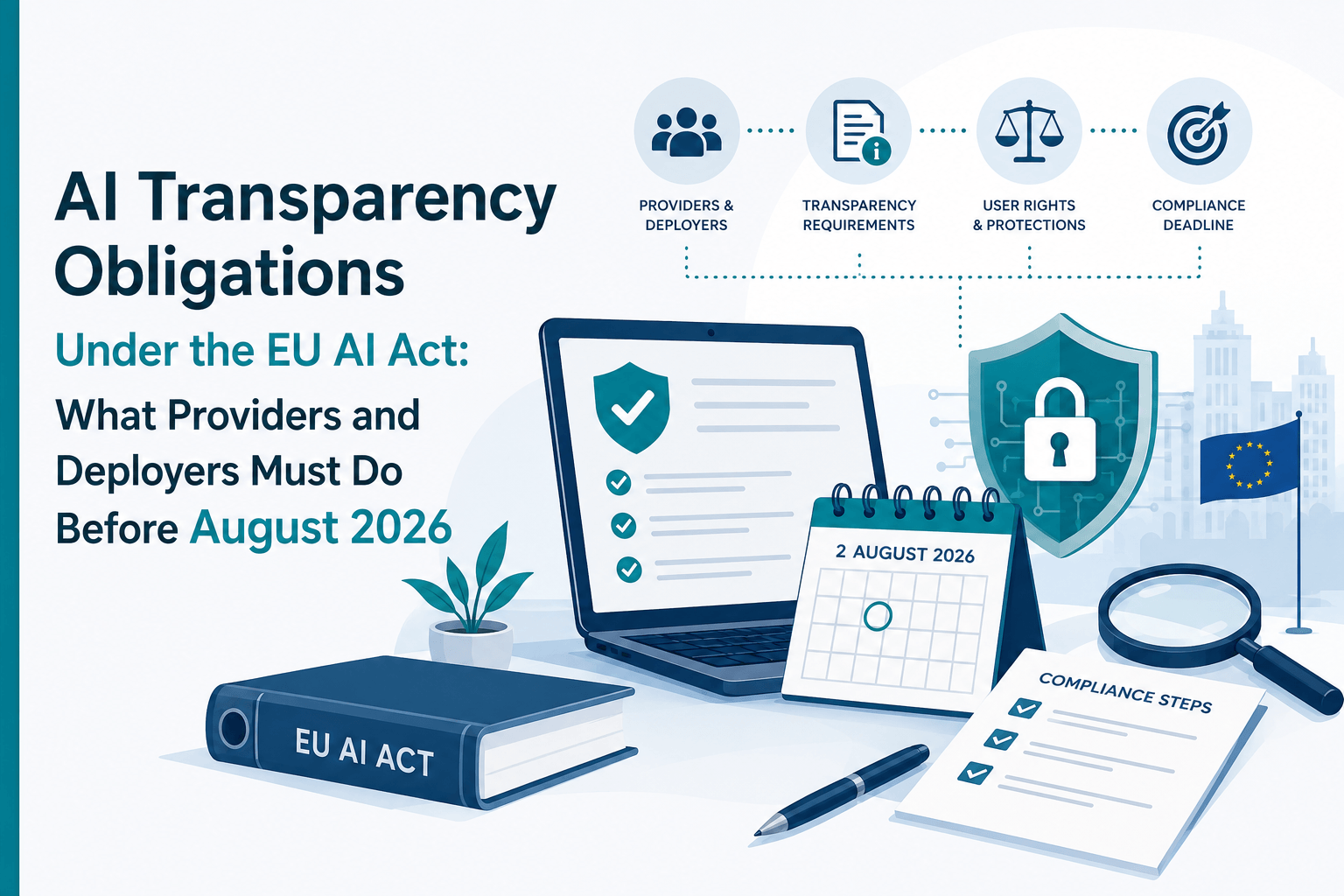
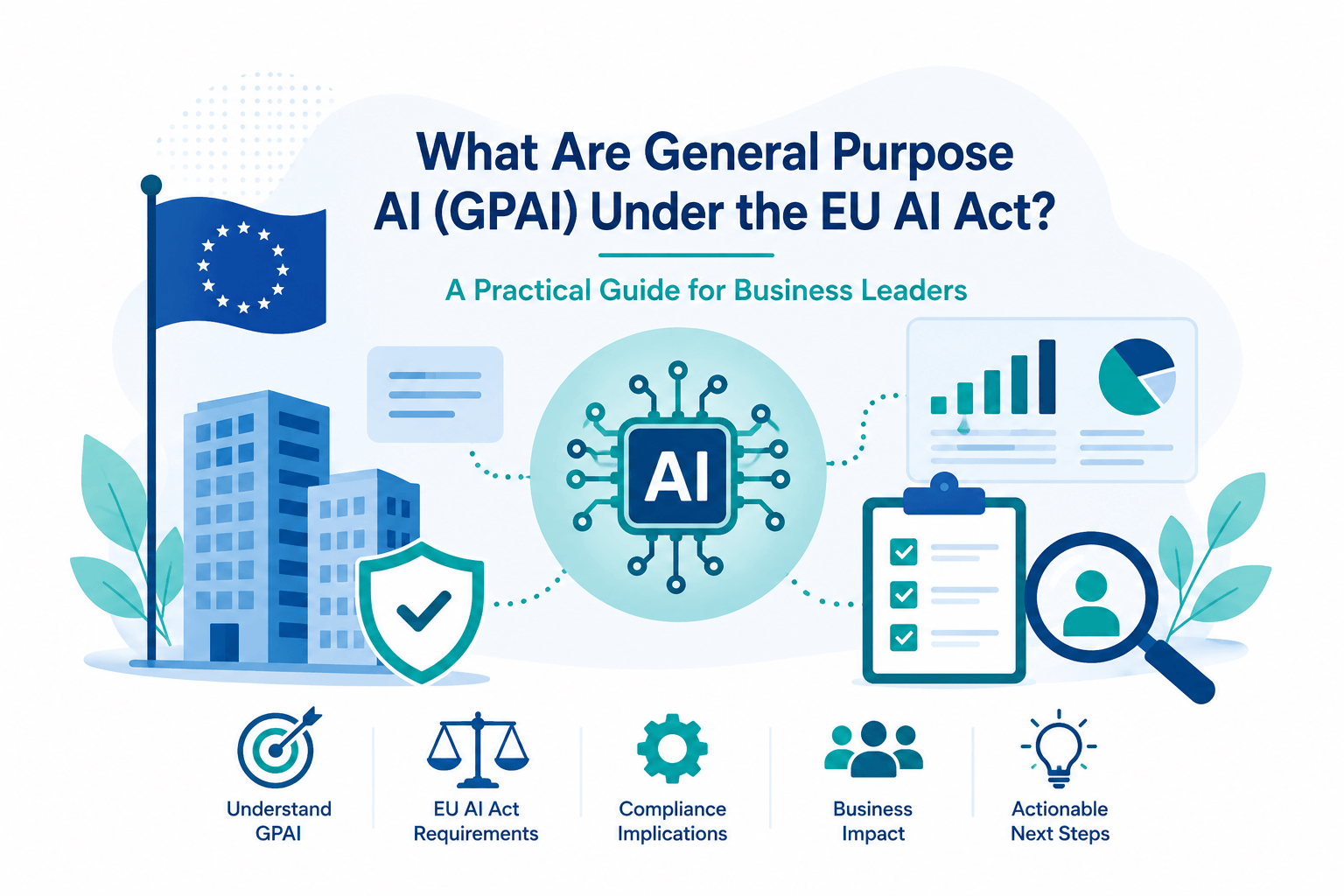
On 7 May 2026, the European Parliament and the Council of the EU reached a provisional political agreement on the AI Omnibus — a targeted recalibration of the EU AI Act (Regulation (EU) 2024/1689). The reforms delay key deadlines, simplify obligations for smaller businesses, clarify how the AI Act interacts with sector-specific product law, and introduce a powerful new prohibition on AI-generated non-consensual intimate imagery. Here is what every organisation operating in or selling into the EU needs to understand — and act on — now.
The EU AI Act Omnibus Explained: What Businesses Need to Know
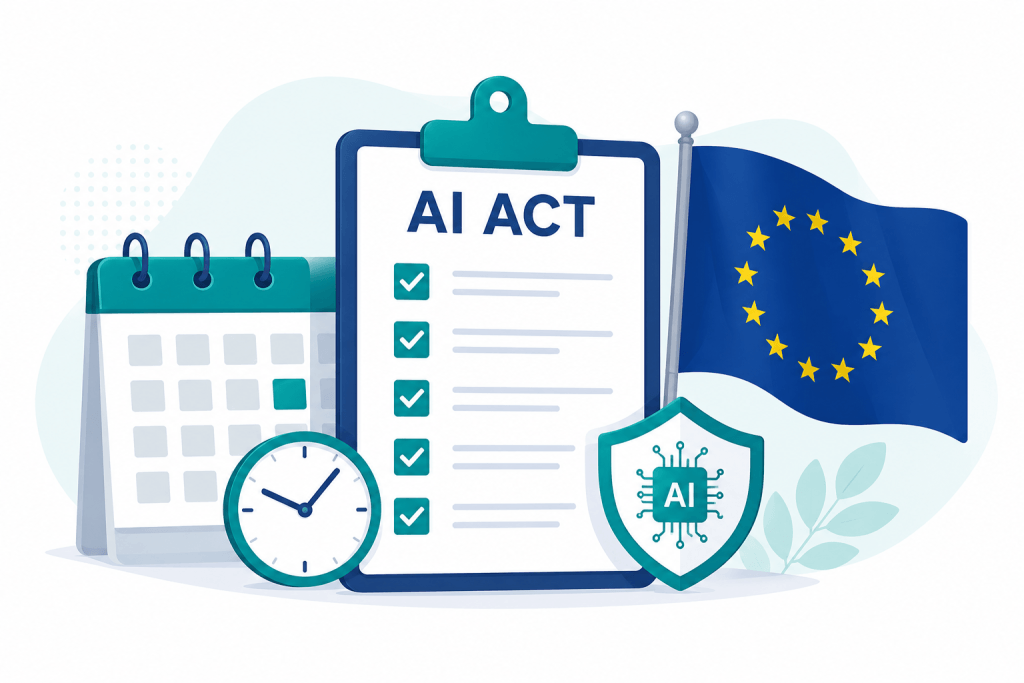
 AI Act timeline extended: The AI Act Omnibus postpones many obligations for high-risk AI systems, while leaving the overall AI Act framework unchanged.
 Extra-territorial scope remains: The EU AI Act continues to apply to organisations both within and outside the European Union where its territorial scope is triggered.
 New prohibited AI practices: The Omnibus introduces new prohibitions covering AI-generated non-consensual intimate imagery (NCII) and child sexual abuse material (CSAM).
 Greater support for SMEs: Small and medium-sized enterprises (SMEs) and small mid-cap businesses benefit from simplified compliance requirements and additional regulatory support.
 Time to prepare: Organisations should use the extended implementation period to strengthen AI governance, risk management, and compliance processes rather than delaying preparations.
What is the EU AI Act Omnibus?

Harmonised Standards Were Not Ready
Many of the technical standards needed to demonstrate compliance with the AI Act had not yet been finalised. Without these standards, providers of high-risk AI systems faced significant uncertainty when preparing technical documentation and conformity assessments.

National Supervisory Structures Were Still Developing
Many Member States had not yet designated competent authorities, notified bodies or supervisory structures responsible for enforcing the AI Act. Businesses therefore lacked clear national guidance.

Smaller Organisations Raised Compliance Concerns
SMEs, start-ups and growing technology companies argued that some compliance obligations were disproportionately complex and resource-intensive. The Omnibus responds by extending several simplification measures to small mid-cap enterprises (SMCs) in addition to SMEs.
Businesses Requested Greater Legal Certainty
Manufacturers of products such as medical devices, machinery, toys and connected products highlighted uncertainty about how the AI Act interacted with existing product safety legislation. The Omnibus seeks to reduce unnecessary duplication.
New AI Risks Emerged
Since the AI Act was originally adopted, regulators have become increasingly concerned about the misuse of generative AI to create:
- non-consensual intimate imagery;
- synthetic child sexual abuse material;
- harmful deepfakes; and
- other forms of AI-generated abusive content.
The Omnibus responds by strengthening the prohibited AI practices under Article 5.
Does the AI Act Omnibus Replace the EU AI Act?
No. One of the most common misconceptions is that the Omnibus replaces or significantly weakens the AI Act.
This is not the case. The Omnibus is best understood as an implementation update rather than a new regulatory framework. The AI Act remains the world’s first comprehensive legislation governing artificial intelligence, and its core principles remain unchanged.
Businesses must still:
- identify where they use AI;
- classify AI systems according to risk;
- implement appropriate governance measures;
- comply with transparency obligations where required;
- maintain technical documentation for high-risk AI systems; and
- establish appropriate human oversight and risk management processes.
The additional implementation time should be viewed as an opportunity to build stronger compliance programmes rather than delaying preparation.
Key Point: The Omnibus changes deadlines and simplifies selected obligations, but it does not remove the AI Act’s fundamental compliance requirements.
What Does the AI Act Omnibus Change?
The Omnibus introduces five significant reforms designed to make implementation more practical while preserving the AI Act’s overall regulatory framework.
At a high level, the Omnibus:
Postpones implementation dates for many high-risk AI obligations
Expands support for SMEs and small mid-cap enterprises
Clarifies interactions with existing EU product legislation
Introduces a new prohibition on certain forms of AI-generated abusive content
Refines specific compliance obligations without altering the overall regulatory structure
These changes are intended to make implementation more practical while maintaining the high level of protection established by the AI Act. The following sections examine each reform in detail.
What Does the AI Act Omnibus NOT Change?
While much attention has focused on the delayed deadlines, organisations should understand that the AI Act’s core architecture remains intact.
The Omnibus does not change the AI Act’s core architecture.
The four-tier risk classification model
The distinction between providers and deployers
Obligations relating to prohibited AI practices
The governance framework for general-purpose AI (GPAI) models
The requirement to manage risks proportionately
Documentation, transparency and human oversight requirements
The AI Act’s extraterritorial application to organisations outside the EU
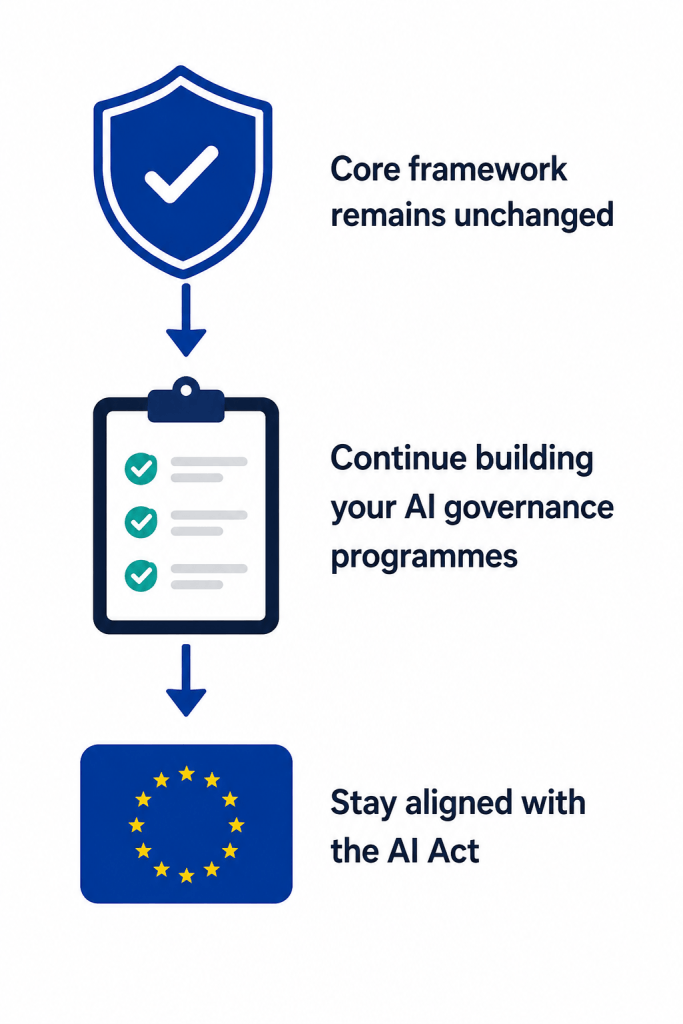
In practical terms, organisations should continue building AI governance programmes, conducting AI inventories and preparing documentation even if formal compliance deadlines have moved.
Businesses that delay preparation until the new deadlines risk compressed implementation programmes, increased compliance costs and greater regulatory exposure.
Why Businesses Should Continue Preparing Now
The Omnibus creates additional time, but it does not eliminate compliance obligations.
Forward-looking organisations should use this period to strengthen AI governance and prepare for the revised implementation deadlines.
Organisations should continue to:
Practical advice
The New AI Act Timeline: What Has Changed?
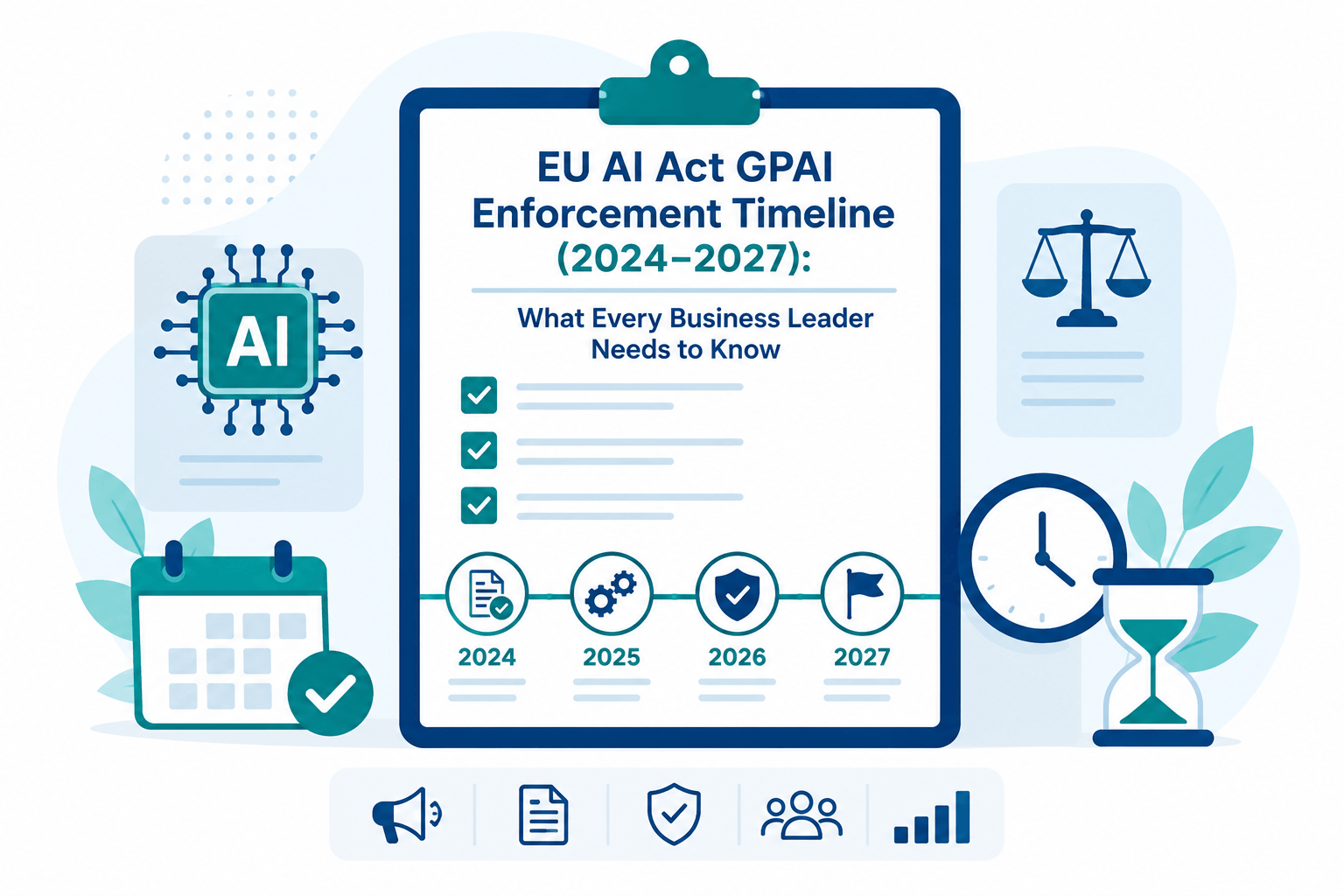
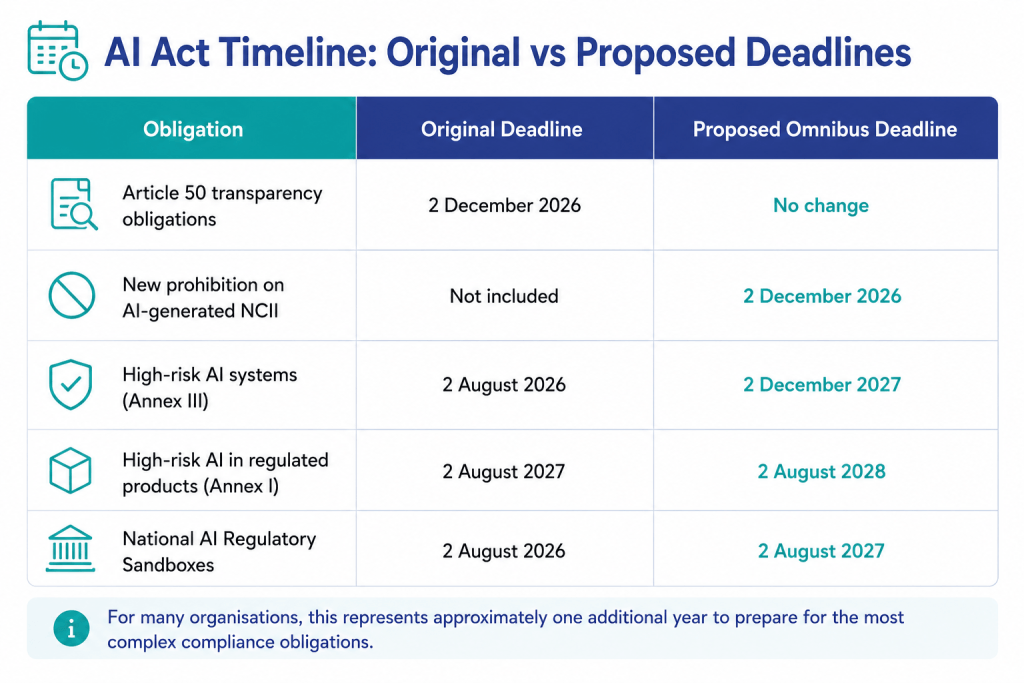
One of the most significant changes introduced by the AI Act Omnibus is the postponement of several compliance deadlines for high-risk AI systems.
The revised timetable is intended to give businesses, national regulators and conformity assessment bodies sufficient time to prepare for implementation, particularly while harmonised technical standards are still being developed.
However, organisations should remember one important point:
Until the Omnibus is formally adopted, the original AI Act implementation dates remain legally applicable. Businesses should therefore continue planning for compliance while monitoring the legislative process
What Happens on 2 December 2026?
Although much attention has focused on delayed obligations, December 2026 remains a critical compliance milestone.
- From this date:
- Article 50 transparency obligations apply.
- Providers must comply with transparency requirements for certain AI-generated content.
- The new prohibition on AI systems that generate non-consensual intimate imagery (NCII) enters into force.
- New prohibitions relating to AI-generated child sexual abuse material also apply.
For organisations developing or deploying generative AI systems, these obligations should already form part of compliance planning.
What Happens on 2 December 2027?
This is the new proposed implementation date for stand-alone high-risk AI systems listed in Annex III.
Examples include AI systems used in:
- recruitment and employment;
- education;
- biometric identification;
- critical infrastructure;
- migration and border management;
- law enforcement;
- access to essential public services.
Providers and deployers of these systems should use the additional implementation period to complete:
- AI inventories;
- risk assessments;
- technical documentation;
- governance procedures;
- human oversight measures;
- post-market monitoring processes.
The additional time should not be viewed as an opportunity to postpone compliance activities.
What Happens on 2 August 2028?
The Omnibus also postpones obligations for AI systems that form part of regulated products covered by Annex I.
These include AI integrated into products such as:
- medical devices;
- machinery;
- lifts;
- toys;
- watercraft;
- radio equipment;
- connected consumer products.
The delayed implementation allows alignment between the AI Act and existing EU product safety legislation.
The Five Most Important Changes Introduced by the AI Act Omnibus
Although the Omnibus contains numerous technical amendments, five reforms are likely to have the greatest practical impact on businesses.
What Has Not Been Relaxed?
Some organisations assume the Omnibus significantly weakens the AI Act. That assumption is incorrect.
The following obligations remain central to the AI Act:
Risk management
Technical documentation
Human oversight
Transparency
Post-market monitoring
Record keeping
Governance
Accountability
Businesses should therefore continue investing in compliance programmes rather than waiting for the revised deadlines.
💡 Key Takeaway
The AI Act Omnibus gives organisations more time—but not fewer responsibilities.
Businesses that use the additional implementation period to strengthen governance, improve documentation and increase AI literacy will be significantly better positioned when the revised deadlines take effect.
In the next section, we examine what the Omnibus means for organisations in Ireland, Spain, the United Kingdom and the United States, before setting out a practical compliance roadmap for the next 12 months.
Official sources and further reading
European Commission — Digital Omnibus on AI Regulation Proposal (COM(2025) 836), 19 November 2025.
Council of the EU — Press release, “Artificial intelligence: Council and Parliament agree to simplify and streamline rules”, 7 May 2026.
European Parliament Legislative Train — Digital Omnibus on AI.
EU AI Act — Regulation (EU) 2024/1689, Official Journal of the European Union.
Department of Enterprise, Trade and Employment (Ireland) — EU Artificial Intelligence Act guidance.
AESIA — Agencia Española de Supervisión de la Inteligencia Artificial (Spain).
Disclaimer: This blog post is provided by Symmetry Compliance for general information purposes only. It reflects the state of the AI Act Omnibus as of May 2026, based on the provisional political agreement of 7 May 2026, and does not constitute legal advice. The Omnibus has not yet been formally adopted; the final text and its application dates may change. For advice on your specific situation, please contact us at info@symmetrycompliance.ie.