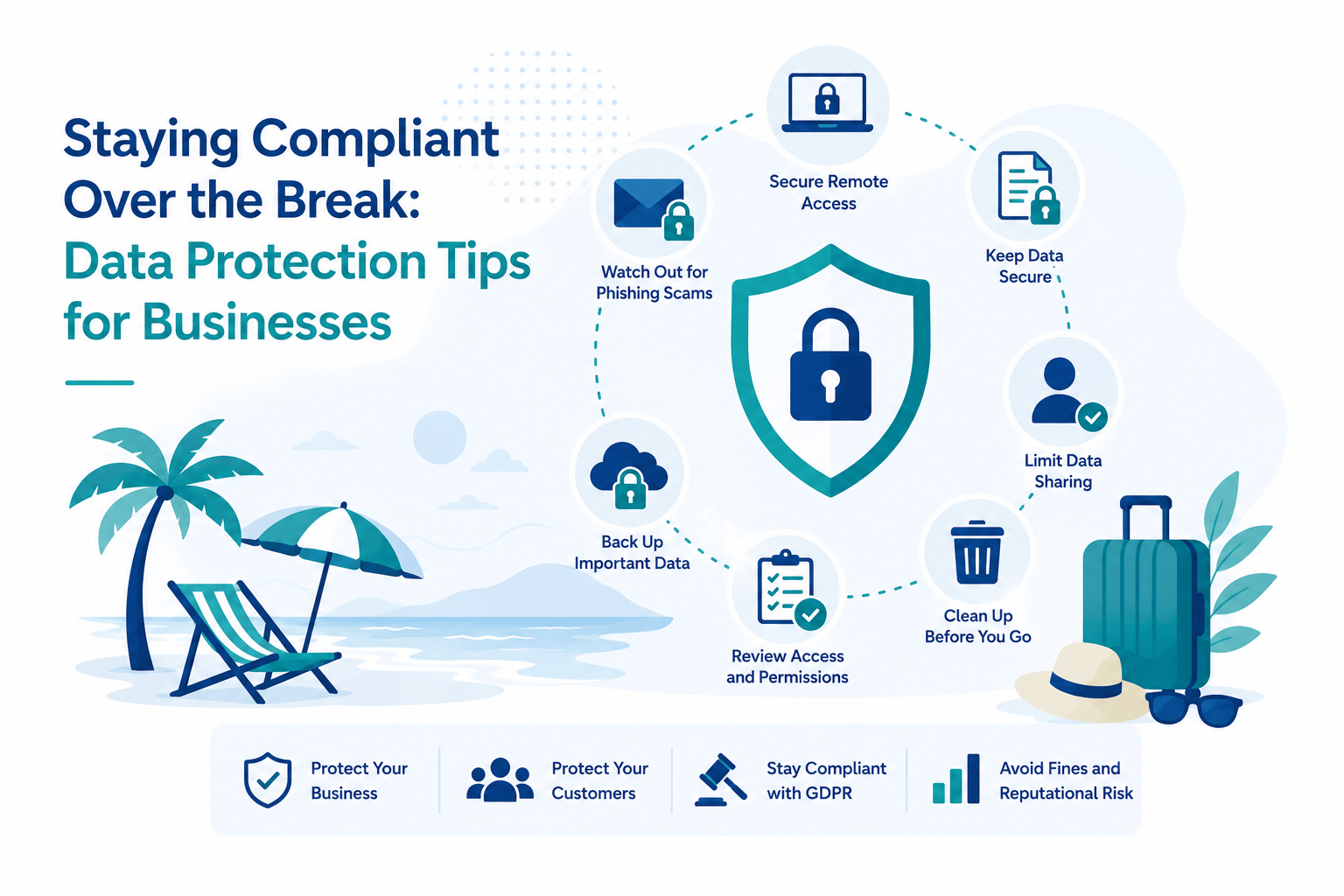
Data privacy might not be the first thing on your mind as you prepare for a few days off—but data privacy risks don’t take time off! Holiday seasons, including Easter, are prime time for cybercriminals to strike, and a moment of relaxation could quickly become a data protection headache. With increased online activity, staff absences, and reduced IT monitoring, the risk of breaches and compliance gaps rises significantly.
Here are our tips to help you stay secure, compliant, and in control of your data protection responsibilities this Easter.
Seasonal Phishing Scams
Phishing attempts often spike during holiday periods. Cybercriminals use themed messages, such as Easter promotions, gift card giveaways, or fake charity appeals, to trick users to reveal sensitive information. These messages are often well-crafted and may use festive imagery or limited-time offers to pressure recipients into clicking without due diligence. These attacks are not only more common during holidays, but also more successful due to reduced vigilance.
To reduce this risk, staff should be trained on how to spot suspicious emails. For example, check for unusual sender addresses, spelling errors, and urgent language prompting quick action. If in doubt, always verify the legitimacy of the email through official channels before clicking on any links or downloading attachments.
For detailed information on phishing risks and practical guidance on how to protect against them, see the Irish Data Protection Commission’s guidance here.
Reduced Staffing and GDPR Obligations
Your legal obligations under the GDPR don’t take time off. Reduced staffing can delay responses to data subject access requests (DSARs), security incident reports, and breach notifications. This can delay responses to data subject requests or incident reports, potentially putting the organisation at risk of non-compliance.
Before staff leave for the holidays, organisations should ensure there is continuity in data protection responsibilities. Consider setting up out-of-office coverage for your DPO or privacy team. Make sure there’s clarity on who is responsible for managing potential data breaches, especially when response time is critical.
Secure Device Use and Remote Access
Many employees and business owners travel during Easter. Whether checking emails from a café or logging into cloud platforms from a hotel, remote access increases the risk of data leaks or system compromises.
Best practices include:
-
Avoid using public Wi-Fi without a secure VPN.
-
Enable multi-factor authentication for work-related systems.
-
Refrain from accessing sensitive systems unless necessary.
-
Keep devices physically secure when on the move.
It’s also worth reminding employees not to download unfamiliar apps or software during the holidays, even if they appear festive or fun. These can be vehicles for malware or data harvesting.
Prepare Your Holiday Risk Plan
If your business operates in sectors like e-commerce or retail, Easter often brings increased online traffic—along with higher volumes of data collection, payment processing, and customer inquiries. To stay compliant, ensure your systems are properly load-tested and that all data handling practices remain GDPR-compliant, even under peak pressure.
To avoid data privacy pitfalls during Easter, businesses should:
-
Review and update their privacy notices and cookie banners
-
Ensure data processing agreements with third parties are current
-
Confirm that consent mechanisms are clear, lawful, and GDPR-compliant
-
Test the resilience and security of customer-facing systems, such as e-commerce platforms
How Can Symmetry Compliance Help?
At Symmetry Compliance, we specialize in guiding businesses through the intricacies of GDPR compliance. Our experienced team transforms complex regulatory requirements into practical, actionable steps.
Contact us for customized guidance on GDPR compliance and data governance tailored to your organisational needs.