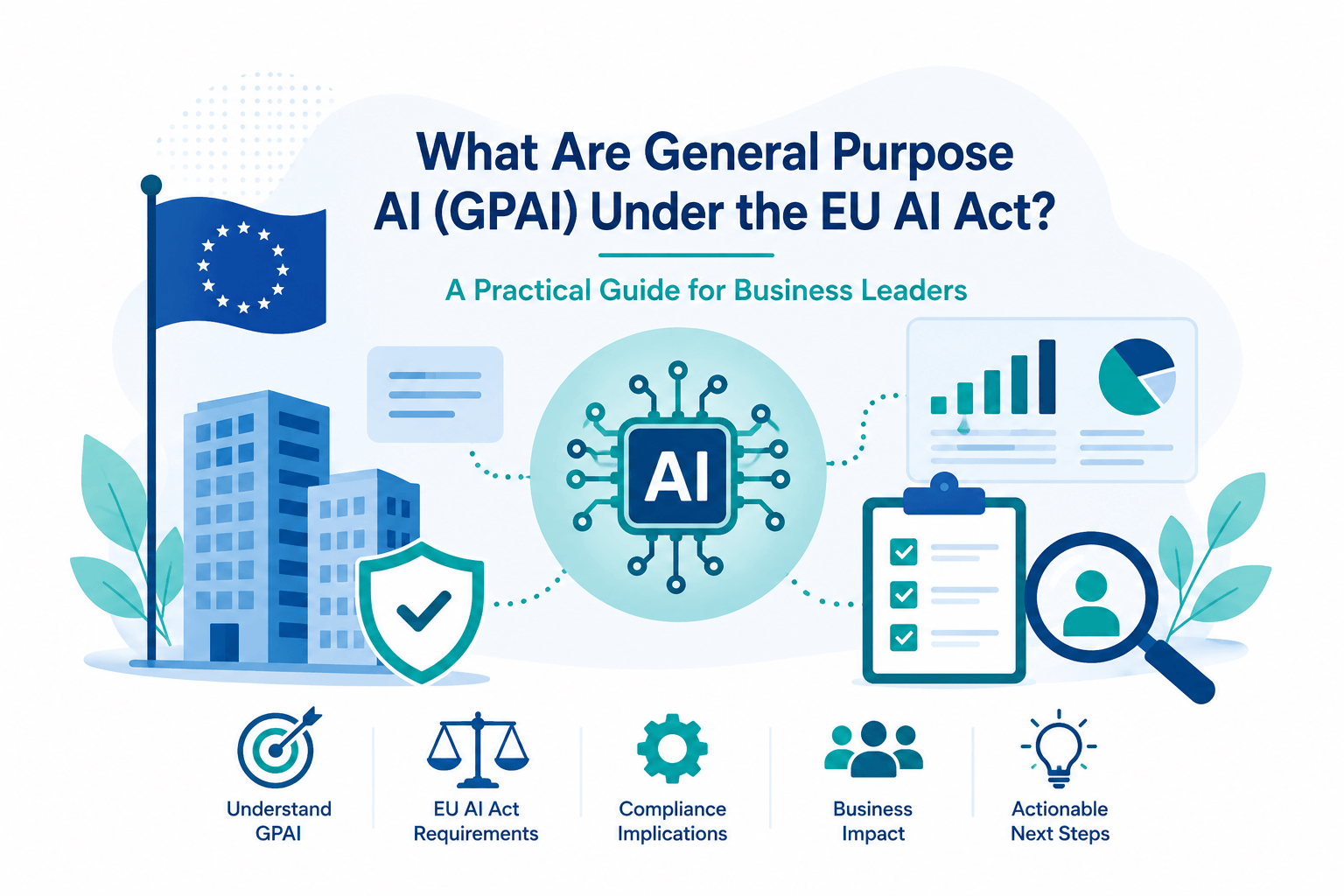
The EU AI Act establishes a regulatory framework that aims to foster the development and deployment of artificial intelligence in the EU. In pursuit of these objectives, the EU AI Act imposes obligations on Providers and Deployers of AI systems to ensure adequate AI literacy of their staff. AI literacy compliance with the EU AI Act involves ensuring that employees possess the necessary technical and ethical knowledge to handle AI systems responsibly.
What is AI Literacy under the EU AI Act?
AI literacy, as outlined in the EU AI Act, refers to the essential knowledge, skills, and understanding required to develop, deploy, and operate AI systems effectively. According to Article 4 of the EU AI Act, any provider and deployer of AI systems must provide a sufficient level of AI literacy to their employees and their staff. The extent and content of these trainings should vary depending on the technical knowledge, experience, education and responsibilities within the organisations.
Purposes of AI Literacy
Recital 20 of the EU AI Act explains the main reasons for AI literacy. According to it, AI literacy might bring about:
- Maximisation of benefits from AI: Safeguarding fundamental rights, health and, safety, AI literacy promotes democratic control over technology.
- Promote Compliance and Enforcement: The educated workforce makes the organization compliant with the requirements and the ethical standards sought in the AI Act.
- Better Working Conditions and Innovation: Firms ought to provide a better understanding of AI; hence, it will sustain innovation with trustworthy AI practices across the EU.
How Can Organizations Achieve AI Literacy Compliance?
Organizations must ensure that staff and others involved in AI operations possess adequate AI literacy. This entails not only understanding the technical aspects of AI systems and their proper application during development and deployment but also interpreting outputs accurately. Additionally, AI literacy programs should cover a broad range of topics, including ethical, business, and operational dimensions, beyond basic technical knowledge.
Step-by-Step Guideline for Organisations.
To achieve the objectives and fully comply with the EU AI Act , organizations should follow a strategic, multi-step approach.
- Assess Current AI Literacy Levels
- Evaluate the AI knowledge across your organization to identify gaps.
- Include staff involved in the development, deployment, and operation of AI systems in the assessment.
- Develop and Implement AI Literacy Trainings
- Create role-specific training programs covering the technical aspects, ethics, risks, and compliance needs of AI systems.
- Ensure ongoing learning opportunities through refreshers and updated content.
- Establish Policies and Monitoring Procedures
- Incorporate AI literacy training into the organization’s compliance framework.
- Set up tracking mechanisms to monitor participation and measure the effectiveness of training initiatives.
- Regular checks and updates
- Periodically assess whether AI literacy levels align with evolving technologies and regulatory changes.
- Update training programs and policies as needed to address new developments or identified gaps.
- Encourage feedback from staff to ensure training remains relevant and effective.
- Documentation and Reporting
- Keep comprehensive records of training programs, attendance, and assessments.
- Be prepared to demonstrate compliance during audits by regulatory bodies.
When to Comply?
Organizations must comply with the AI literacy requirement outlined in Article 4 of the EU AI Act by February 1, 2025. However, compliance with the AI Act provisions requires continuous effort and adaptation—a necessity in today’s fast-changing technological environment.
How can Symmetry Compliance help?
At Symmetry Compliance we assist our clients to comply with the AI Act. We have solid experience in operationalising organisation’s compliance with data protection and governance legislation. For AI compliance, we set up a dedicated team ready to assist with a diversity of queries and assignments.
Contact us for more information and guidance.